Ever wondered how your eyes actually work? These two small organs capture the world around you every second, and your brain turns that light into the images you see. Here’s how it all happens — explained simply.
Your Eyes Are Like Tiny Cameras
You have two eyes working together to give you a wide, 3D view of the world. Here’s what each part does:
- Cornea — the clear front layer that lets light in first
- Pupil & Iris — the pupil controls light entry; the iris (colored part) adjusts it, like a camera aperture
- Lens — flexes to focus on near and far objects
- Retina — captures the image and sends it to your brain via the optic nerve
Fun fact: You don’t see with your eyes — you see with your brain. Your eyes collect light; your brain creates the image.
How Vision Works: From Light to Sight
- Light bounces off an object
- It enters your eye and bends through the cornea and lens
- It lands on the retina, upside down
- Rods and cones convert light into electrical signals
- The optic nerve sends signals to the brain
- Your brain flips the image and processes color, shape, and motion
That’s it — a real-time, non-stop visual processing system running in your head.
Color Vision vs Night Vision
Your retina has two types of photoreceptor cells:
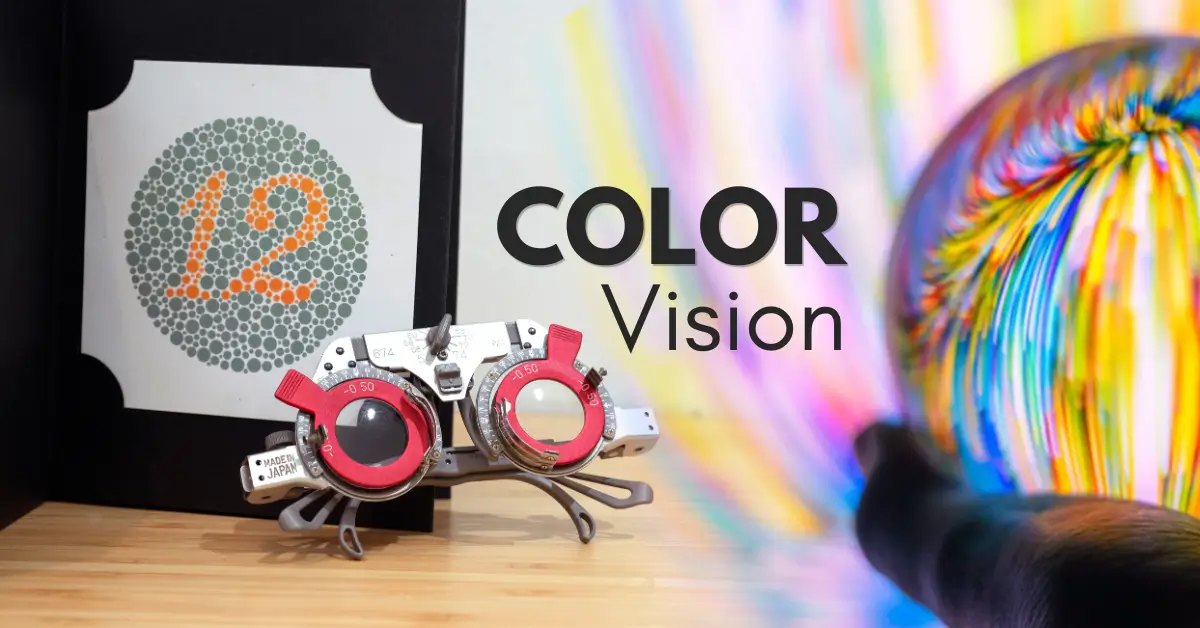
- Cones — active in bright light, responsible for color vision (red, green, blue)
- Rods — active in low light, but only in black and white
This is why you can’t see colors clearly at night, but you can still make out shapes and movement.
Common Vision Problems
Sometimes light doesn’t focus correctly on the retina. This causes:
- Myopia (nearsightedness) — distant objects look blurry
- Hyperopia (farsightedness) — close-up objects look blurry
- Astigmatism — an irregularly shaped cornea causes overall blurry vision
These are corrected with glasses, contact lenses, or vision therapy.
Nutrition for Better Eye Health
Vitamin A, C, E, and zinc support healthy vision. Add these to your diet:
- Carrots, spinach, eggs, fish, nuts
- Plenty of water for eye hydration
Protect Your Eyes from Digital Screen Strain
Staring at screens all day reduces your blink rate and strains your eyes. Follow the 20-20-20 rule: every 20 minutes, look at something 20 feet away for 20 seconds.
Final Takeaway
Your eyes do more than help you see — they connect you to the world. Take care of them with a healthy diet, screen breaks, and regular eye check-ups.