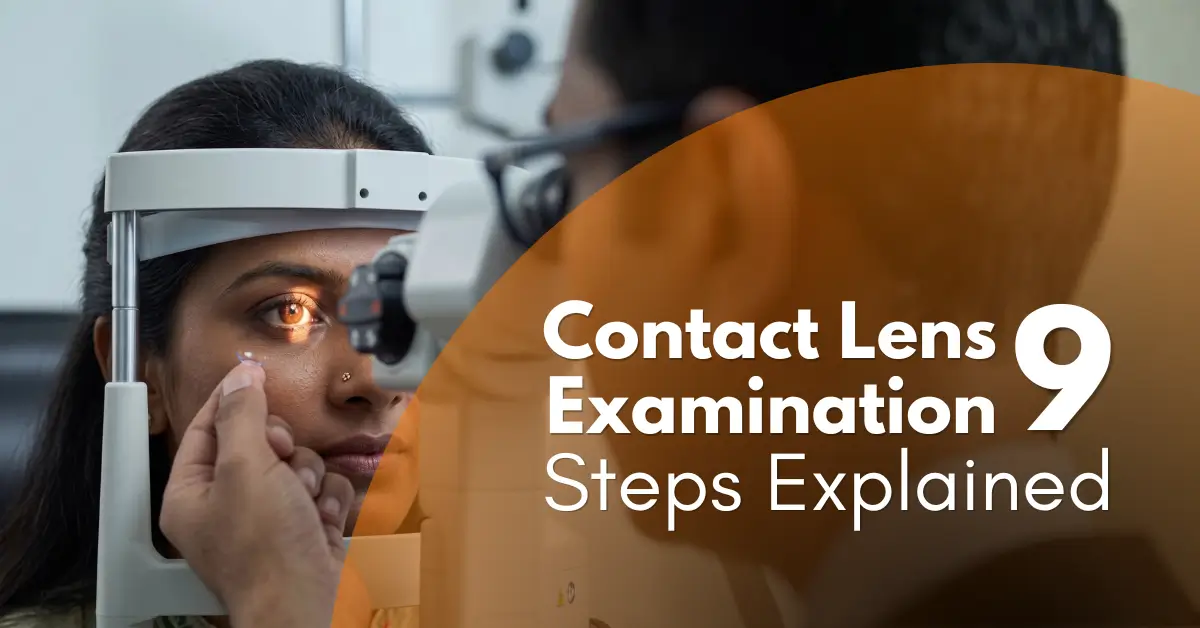
Thinking about switching to contact lenses? A proper contact lens examination ensures they fit right, feel comfortable, and protect your eye health. Here’s what actually happens during the exam.
What Is a Contact Lens Examination?
A contact lens exam is more detailed than a regular eye test. It checks if your eyes are suitable for contact lenses and determines the best lens type, material, and design for you. A contactologist (a specialist trained in contact lens fitting) performs this exam.
For conditions like keratoconus, contact lenses may be the only effective vision correction option — spectacles simply don’t work as well.
The 9 Steps of a Contact Lens Exam
- Patient History
The practitioner asks about your lifestyle, past contact lens use, allergies, medications, and current spectacle prescription. - Comprehensive Eye Examination
Includes vision testing, refraction, binocular vision assessment, and a slit-lamp check for overall eye health. Skipped if done recently. - Corneal Curvature Measurement
Your cornea’s curve must match the lens curve for a good fit. A keratometer measures this for regular lenses; a corneal topographer is used for irregular corneas or speciality lenses. - Corneal Diameter Measurement
Determines the correct lens size. - Pupil Size Measurement
Pupil size changes with lighting and affects lens design choice. - Tear Film Assessment
Checks tear quality and quantity, since dry eyes can make contact lens wear uncomfortable. - Contact Lens Trial
Trial lenses are placed and checked under a slit lamp. This can take 30 minutes to a few hours- speciality lens trials may take 4-6 hours. The final prescription and lens power are decided here. - Contact Lens Dispensing
You’re taught proper insertion, removal, cleaning, and storage. Lenses are dispensed once fit and vision are confirmed. - Follow-Up Visits
Essential for catching early issues like redness, discomfort, or poor fit before they become serious.
Signs You Shouldn’t Ignore
Report these to your eye care practitioner immediately:
- Redness
- Excessive tearing
- Discomfort or irritation
A poorly fitted lens can damage your eyes over time.
Final Takeaway
Contact lenses are safe for all age groups when properly fitted. Book a contact lens examination with a qualified practitioner to find your ideal pair.