Ever wonder how your eyes turn light into a rainbow of colors? That’s color vision — and it’s one of the most remarkable things your body does without you even noticing.
How Color Vision Works
Light enters your eye through the cornea and lens. It lands on your retina, a thin layer at the back of the eye. There, two types of cells — rods and cones — turn that light into signals your brain can understand.
Rods handle low light. They help you see at night, but only in shades of gray.
Cones handle color. You have about 6 million of them, mostly packed into a tiny spot called the fovea.
There are three types of cones — sensitive to red, green, and blue light. Every color you see is a mix of signals from these three. Yellow, purple, brown — all blends.
Why It’s Special
- No two people see it quite the same. Color perception varies slightly from person to person.
- It’s rare in nature. Most mammals see far fewer colors than humans do.
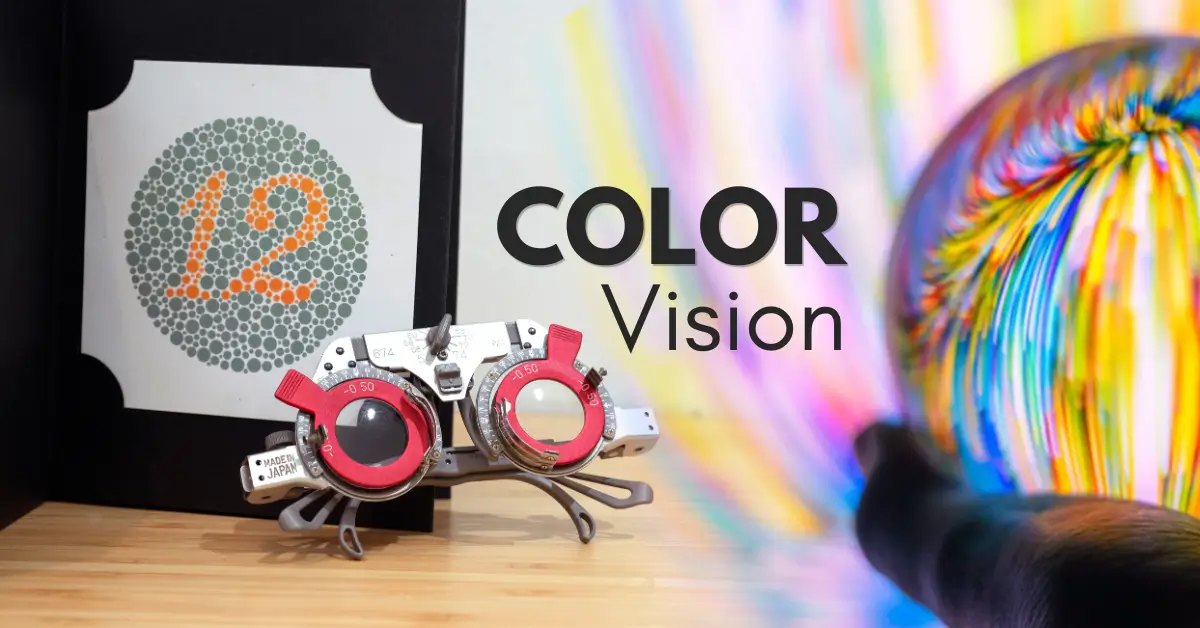
- It’s fragile. A missing or altered cone type causes color blindness — affecting 1 in 12 men and 1 in 200 women.
- It shapes daily life. From reading traffic lights to picking ripe fruit, color vision guides decisions every day.
The Bottom Line
Color vision isn’t just about seeing pretty colors. It’s a finely tuned biological system — light, retina, cones, and brain working together in an instant. Protecting your eye health protects this everyday superpower.