“Do you have computerised eye testing?” It’s the question we hear most at our clinic. And it’s a fair one — but it’s also the wrong one.
What Is Computerised Eye Testing?
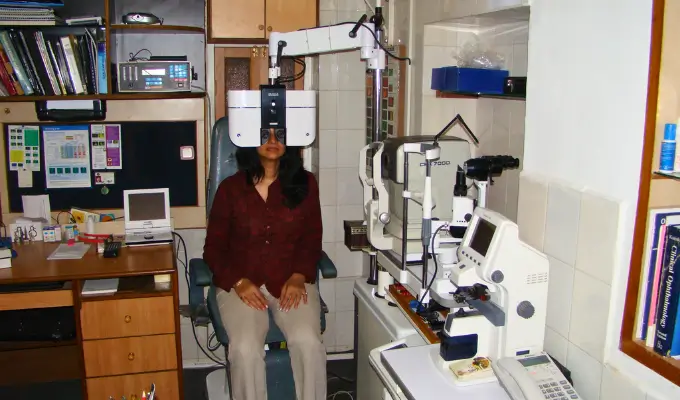
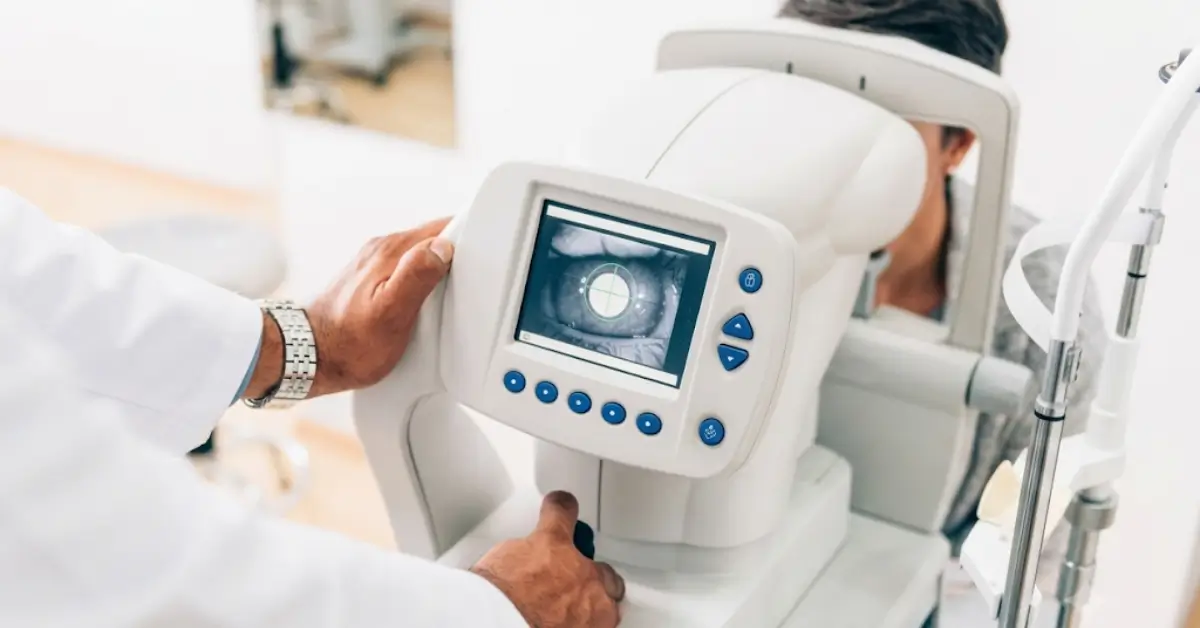
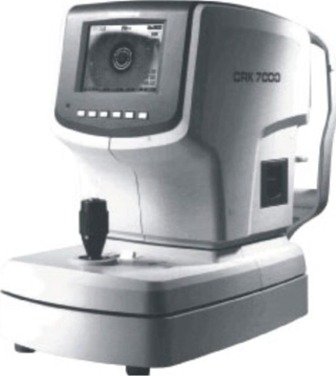
The machine you’re thinking of is called an auto-refractometer. It shines light into your eye, measures how it reflects back, and gives your eye doctor a starting number for your vision.
That’s it. It’s a starting point — not the final answer.
Auto-Refractometer vs Manual Eye Testing
Here’s what most people don’t know:
- Auto-refractometer gives a quick, rough estimate of your power.
- Retinoscopy (the manual method) uses a handheld instrument called a retinoscope, and depends entirely on the optometrist’s skill.
- Subjective testing comes next either way — you read letters on a chart, and your responses fine-tune the final prescription.
Age, eye muscle condition, your work type, and other eye conditions all affect this final number. No machine adjusts for that. A trained eye care practitioner does.
Why Do Clinics Prefer Auto-Refractometers?
Simple: speed. Retinoscopy takes skill and time. With children especially, keeping them still and cooperative for manual testing is tough. The auto-ref speeds things up.
But faster isn’t always more accurate. In some cases, an experienced retinoscopist will out-perform the machine.
So, Is Computerised Eye Testing a Gimmick?
Not a gimmick — just not the full picture. The machine is a tool. The person using it is what determines your prescription’s accuracy.
The Real Question to Ask
Next time you book an eye test, skip the “is it computerised?” question. Ask this instead:
“Is the person examining my eyes qualified and trained?”
That’s what actually gets you an accurate prescription.