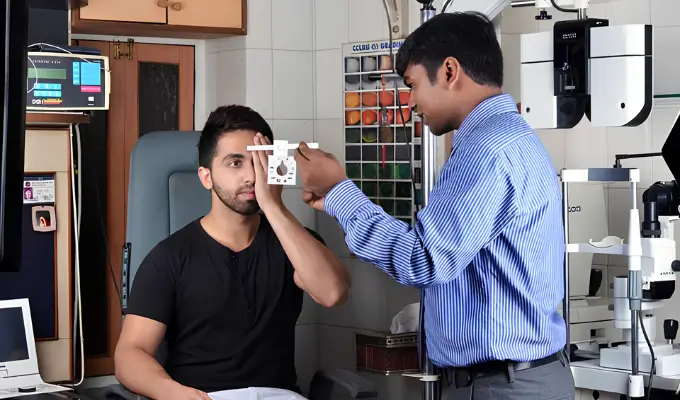
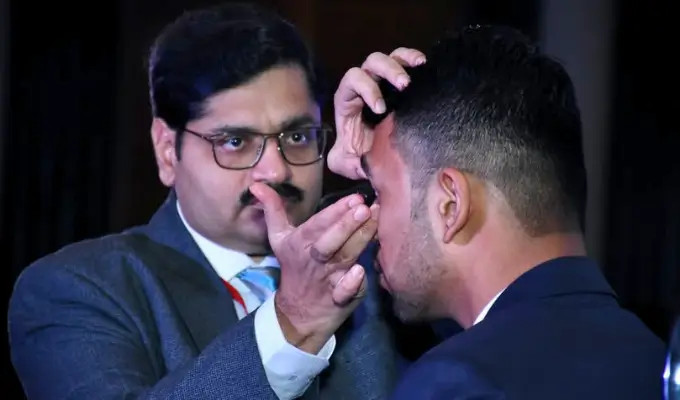
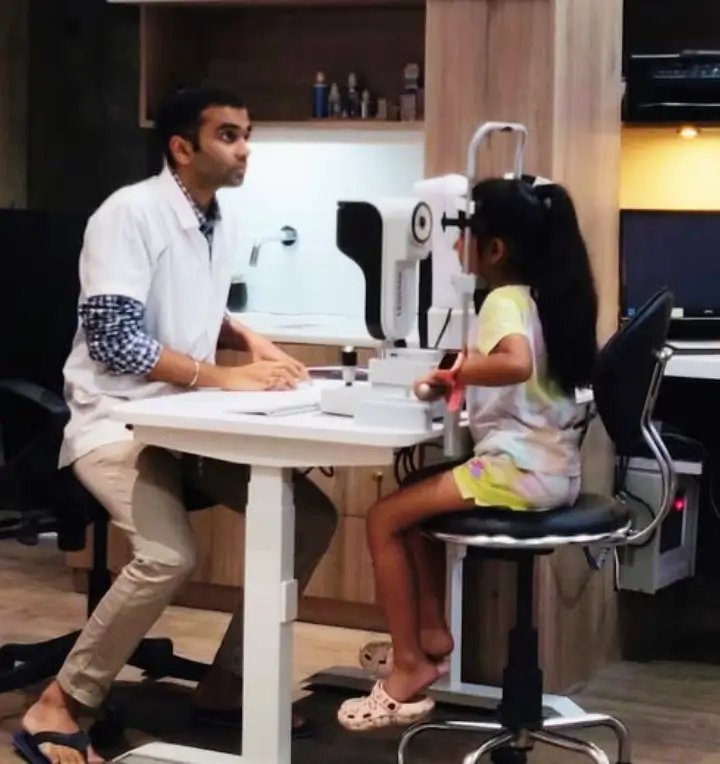
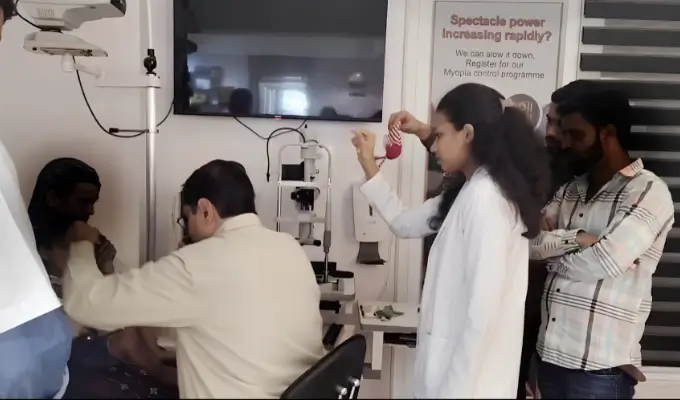
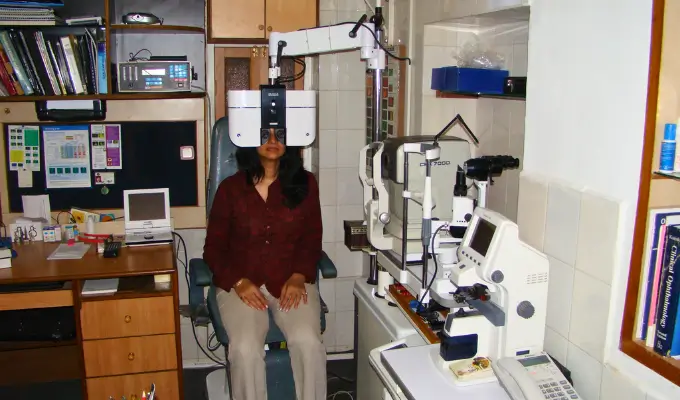
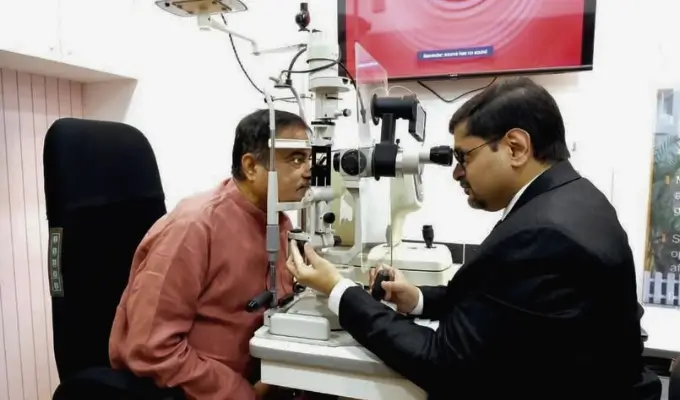
A comprehensive eye examination is a full assessment of both your vision and your eye health- not just a check for glasses. At Saoji Vision Care in Nagpur, every comprehensive exam includes vision testing, eye pressure measurement, a detailed retina and optic nerve check, and an assessment of how well your eyes work together.
This lets us detect not only refractive errors like myopia or astigmatism, but also early signs of conditions such as glaucoma, cataract, diabetic retinopathy, and macular degeneration- many of which show no symptoms until vision is already affected. We recommend a comprehensive eye exam at least once a year for adults, and more frequently for children, diabetics, and anyone with a family history of eye disease. Book your comprehensive eye exam in Nagpur today.
We determine your most accurate distance and near prescription- not approximately right, but precisely right. A small error in refraction causes significant discomfort over hours of use.
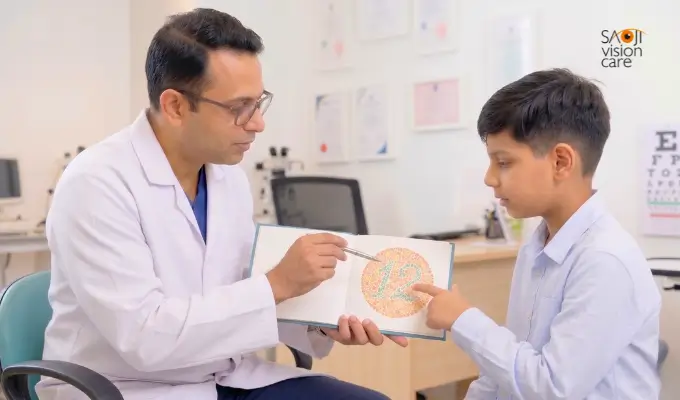
A quick, reliable test for congenital and acquired colour deficiencies. Relevant for career decisions, driving safety, and specific occupational requirements.
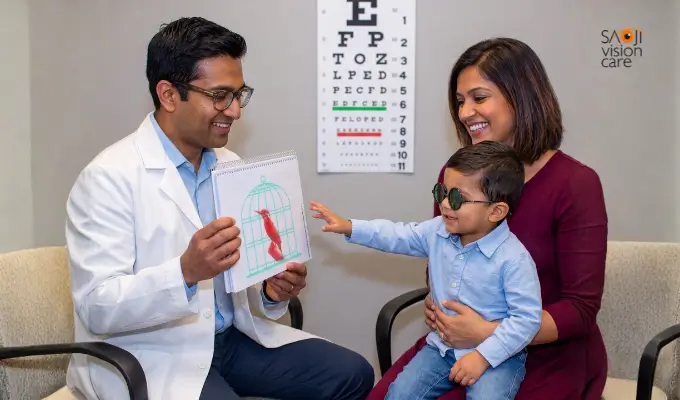
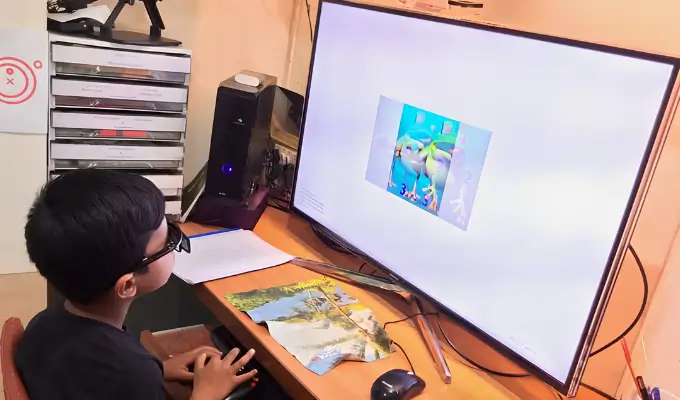
Both eyes must work as a team to produce single, clear, three-dimensional vision. We use the full range of original Bernell instruments to assess eye muscle balance, convergence, focusing flexibility, depth perception, and tracking. Saoji Vision Care is one of the few clinics in India with this complete setup.
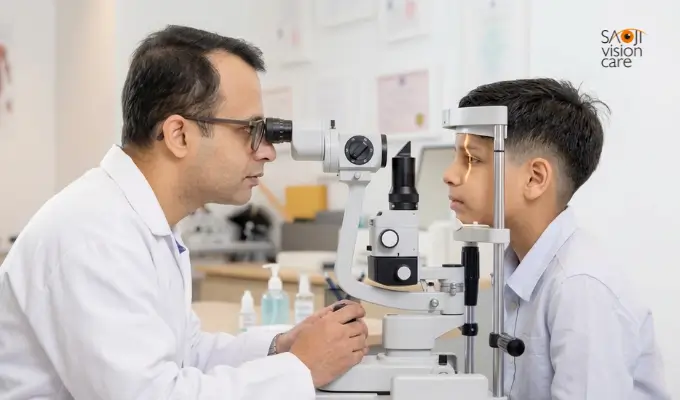
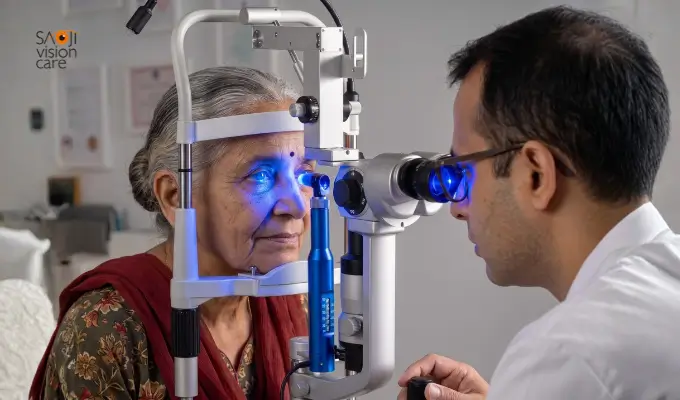
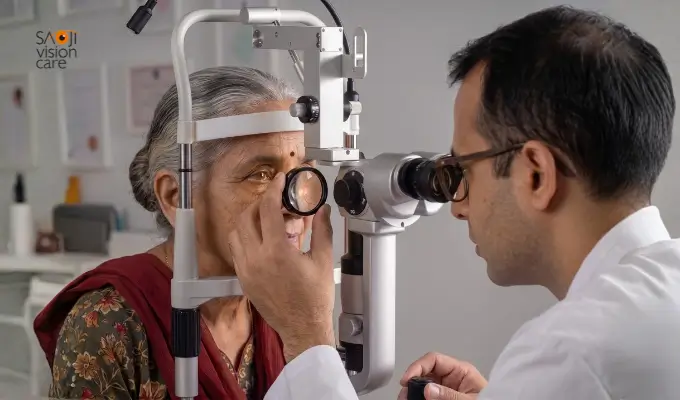
A clinical examination of the cornea, lens, eyelids, and anterior chamber. Detects early cataract, corneal disease, and dry eye- conditions that rarely produce symptoms until advanced.
Elevated eye pressure is the primary risk factor for glaucoma, which damages the optic nerve silently and irreversibly. Included in every full examination.
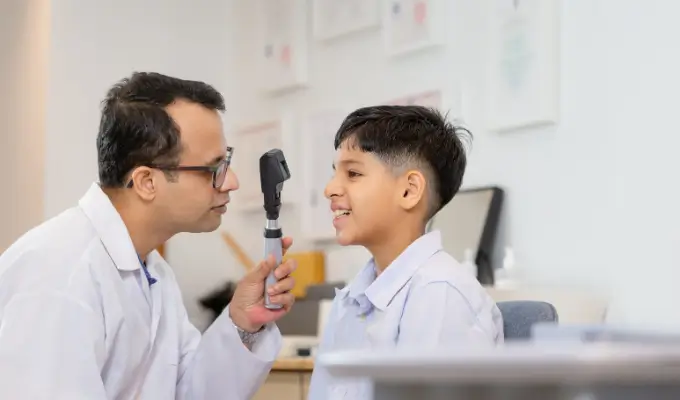
We examine the optic disc, macula, and peripheral retina. Retinal examination detects not only eye diseases — retinal detachment, macular degeneration, diabetic retinopathy — but also systemic conditions like hypertension and diabetes that first become visible in the retinal blood vessels.
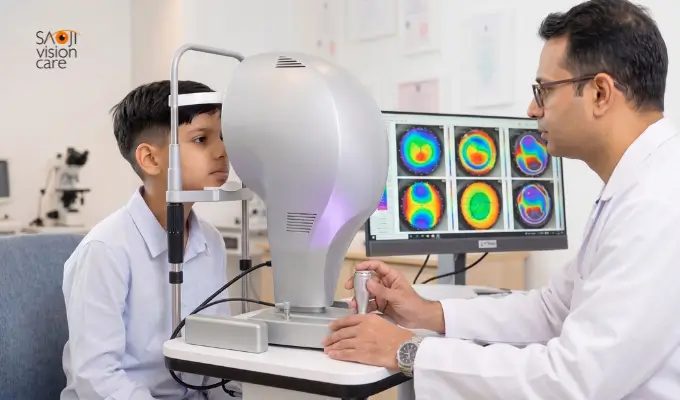
A precise digital map of the corneal surface. Essential for contact lens fitting, Orthokeratology planning, and detecting early keratoconus. Done where clinically indicated.
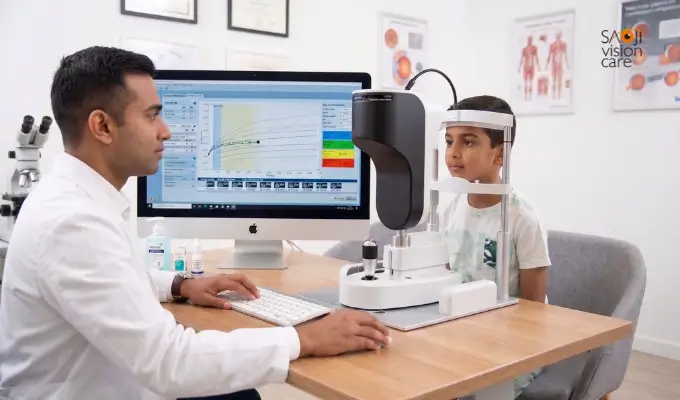
For children and adults with a family history of high myopia, we combine refraction, axial length, age, and lifestyle data to assess future myopia risk and determine whether early intervention is needed.
How Often Should You Get a Comprehensive Eye Exam?
Children (ages 2-10):
Every 6 months. If specifically requested- follow recommendations
Anyone (age 10+ years):
Every year. If specifically requested- follow recommendations
Child with Myopia:
Every 3-6 months
Contact lens wearers:
As recommended based on your eye condition and type of the lens that you are wearing
Everything your eyes deserve. In one thorough examination.
Your symptoms, lifestyle, screen habits, medications, and family history of eye conditions shape every test we do. Nothing is routine- your examination is built around you.
Book Your Examination
Vision and Eye Muscle Testing
Distance and near vision for each eye individually and together- with and without correction.